
SEO vs. AI search optimization: what’s different, and what to do first
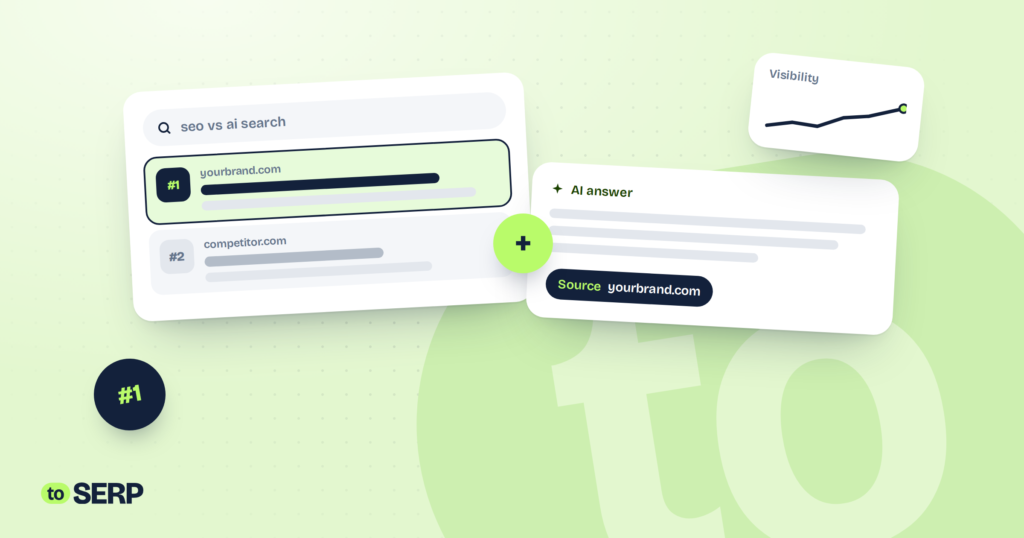
Every few months someone declares that SEO is dead. This time the culprit is AI: ChatGPT, Perplexity and Google’s AI Overviews now answer questions directly, often without a click. So should you stop investing in SEO and switch to “AI search optimization” instead?
Short answer: no. But you shouldn’t ignore the shift either. This guide explains what’s genuinely different, what’s the same, and what to do first if your time and budget are limited.
Key takeaways
- SEO and AI search optimization share the same foundation: crawlable pages, clear answers and trusted authority.
- The difference is the goal. SEO aims for a ranking; AI search optimization aims to be mentioned and cited in the answer.
- Clicks from search are getting harder to win, so being named in AI answers matters more than ever.
- If budget is tight, fix the technical foundation and rewrite key pages answer-first. That helps both at once.
The short answer
SEO gets your pages ranked in search results. AI search optimization, also called generative engine optimization (GEO) or answer engine optimization (AEO), gets your business mentioned and cited inside AI-generated answers. The first is about earning a position on a page. The second is about earning a place in the answer itself. Most of the groundwork is shared, which is why the smartest approach treats them as one program.
What stays the same
AI tools that search the web don’t invent their own internet. They read the same pages search engines do and lean towards the ones that are trusted. So the fundamentals carry over directly:
- Crawlable, fast pages. If a crawler can’t read your page, neither Google nor ChatGPT can use it.
- Content that genuinely answers questions. Thin pages lose in both places.
- Authority. Being referenced by credible sources makes you more likely to rank and more likely to be cited.
What’s actually different
The differences are in what you’re aiming for, what earns trust and how you measure progress.
| SEO | AI search optimization | |
|---|---|---|
| Where you appear | Google and Bing results pages | Answers in ChatGPT, Perplexity, Gemini and AI Overviews |
| What you’re aiming for | A high ranking for a keyword | A mention or citation in the answer |
| How results are chosen | Ranking signals for each individual page | A summary built from several sources at once |
| Content that wins | Pages that match search intent | Direct answers, comparisons and specific facts |
| Trust signals | Links, relevance and site quality | Agreement across trusted sources and consistent brand facts |
| How you measure it | Rankings, clicks and Search Console data | Share of buyer questions where you’re mentioned or cited |
| How stable it is | Rankings shift over weeks | Answers can vary from one day to the next |
Why clicks are getting harder to win
The biggest practical change isn’t technical. It’s behavioral. When an AI summary answers the question, people click less. A 2025 study from Pew Research Center tracked real browsing behavior and found a clear gap:
Two lessons follow. First, rankings alone are a weaker promise than they used to be, so measure leads and pipeline, not just traffic. Second, being the business the answer names is increasingly valuable, because many buyers form their shortlist right there.
What to do first
If you’re starting from scratch or working with a limited budget, this order gets the most from every hour, because each step helps both SEO and AI search:
- Fix the technical foundation. Make sure pages load fast, can be crawled by search engines and AI crawlers, and aren’t blocked by mistake.
- Set up tracking you trust. Know which pages and channels produce leads before you change anything else.
- Rewrite your most important pages answer-first. Service pages, pricing and comparisons should answer the buyer’s question in the first two sentences.
- Make your brand facts consistent. Same name, description and services across your site, profiles and directories.
- Earn authority and mentions. Reviews, industry lists, expert articles and links from credible sites.
- Measure both, monthly. Rankings and traffic for SEO; share of AI answers for AI search; leads for both.
Not sure which of these is holding you back? See what our Growth Audit checks
The terms, in plain English
The industry has invented a lot of acronyms. Here’s what they mean:
- SEO (search engine optimization): improving your site so it ranks in search engines like Google.
- AEO (answer engine optimization): structuring content so it’s used as a direct answer, in featured snippets, voice assistants or AI tools.
- GEO (generative engine optimization): improving how often generative AI tools mention and cite your brand.
- AI Overviews: Google’s AI-generated summaries that appear at the top of some search results.
The labels matter less than the goal behind them: be the clearest, most trusted answer to the questions your buyers ask, wherever they ask them.
Frequently asked questions
Is SEO dead because of AI search?
No. AI tools that search the web rely heavily on the same signals SEO builds: crawlable pages, clear answers and authority. What’s changing is how people consume results, so it’s no longer enough to rank. You also want to be the business the answer names.
Is GEO just SEO with a new name?
Not quite. They share a foundation, but generative engine optimization adds work SEO traditionally didn’t focus on: tracking AI answers, making brand facts consistent across the web and earning mentions that AI tools treat as consensus.
Do I need separate agencies for SEO and AI search?
It’s usually better not to. The two overlap so much that splitting them creates duplicate work and conflicting advice. One team running both from the same plan and the same reporting is simpler and cheaper.
How do I measure AI search visibility?
Pick 20 to 50 questions your buyers ask, run them in the main AI tools every month, and track the share where you’re mentioned or cited. Report it alongside rankings, traffic and, most importantly, leads.