
Google Ads vs. Meta Ads vs. LinkedIn Ads: which is right for your business?
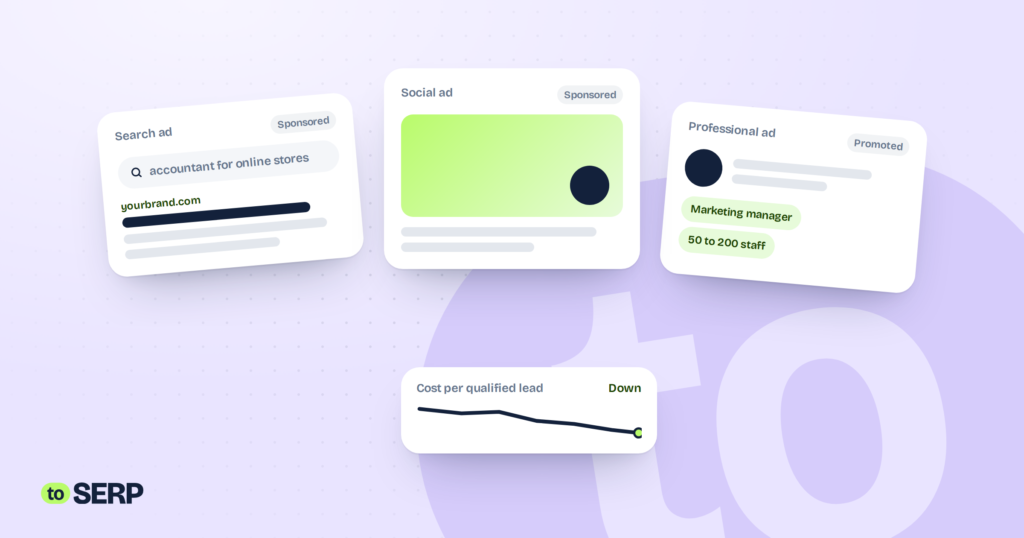
Google, Meta and LinkedIn all promise to put your business in front of the right people. They’re not interchangeable, though. Each platform reaches buyers at a different moment, with different targeting and very different costs.
This guide compares the three side by side, explains when each one wins, and helps you decide where to put your first ad dollar.
Key takeaways
- Google Ads captures existing demand from people already searching for what you sell.
- Meta Ads creates demand by reaching people as they scroll, and is strong for retargeting.
- LinkedIn Ads reaches people by job title, company and industry, at a premium price.
- Start with the platform that matches how your buyers look for you, then expand once it works.
How big each platform is
All three reach enormous audiences. The difference is what those people are doing when they see your ad.
The short answer
Google is where people go when they already know what they need, so it captures demand. Meta, which covers Facebook and Instagram, reaches people while they scroll, so it creates demand and keeps you top of mind. LinkedIn lets you target people by their professional details, so it’s the most precise way to reach specific roles, at the highest price per click.
Side-by-side comparison
| Google Ads | Meta Ads | LinkedIn Ads | |
|---|---|---|---|
| What it does best | Captures people actively searching | Creates interest and retargets visitors | Reaches specific roles and companies |
| How you target | Keywords and search intent | Interests, behaviors and lookalike audiences | Job title, seniority, company and industry |
| Buyer intent | High: they’re looking now | Lower: they’re browsing | Medium: they’re in a work mindset |
| Relative cost per click | Medium to high, depending on keyword | Usually the lowest | Usually the highest |
| Best ad formats | Search ads, Performance Max | Image, video, carousel, lead forms | Single image, document, lead gen forms |
| Main risk | Wasted spend on irrelevant searches | Low-quality leads, creative fatigue | Small audiences and high costs |
When Google Ads wins
If people search for what you sell, Google Ads is usually the best place to start. Someone typing “accountant for small online stores” or “CRM pricing” has already decided they need something. Your job is simply to be the best answer at that moment.
The common pitfalls are broad keywords that attract the wrong searches, and sending clicks to a generic home page. Tight keyword lists, regular review of the search terms report and focused landing pages fix most of the waste.
When Meta Ads wins
Meta works best when buyers don’t know to search for you yet: a new type of product, an offer that’s easy to show visually, or a service people buy on impulse or emotion. It’s also excellent for retargeting people who visited your site but didn’t get in touch.
The trade-off is intent. People are scrolling, not shopping, so lead quality can vary. Strong creative, refreshed often, and qualifying questions on your forms keep it in check.
When LinkedIn Ads wins
LinkedIn is the only platform where you can reliably reach “operations directors at logistics companies with 200 to 1,000 employees”. If you sell a high-value service to specific roles, that precision can justify the higher cost per click.
The risk is spending a lot on small audiences with a weak offer. LinkedIn rewards genuinely useful content, such as a guide, benchmark or audit, over “book a demo” ads aimed at people who’ve never heard of you.
How to choose where to start
- Do people search for what you sell? Start with Google Ads.
- Is your offer new, visual or easy to show? Start with Meta Ads.
- Do you sell high-value work to specific job titles? Start with LinkedIn Ads.
- Budget for at least $1,500 a month on one platform so tests give clear answers.
- Add a second platform only once the first brings in qualified leads at a cost that works.
Not sure which platform fits your business? See how we run paid media
What makes any platform work
The platform matters less than the basics. Track the right conversions, ideally with lead quality fed back from your CRM, so the algorithms optimize for real inquiries. Send every click to a page built for that offer. Test new creative regularly. And judge every campaign on cost per qualified lead, not on clicks or impressions.
Frequently asked questions
Which platform is cheapest?
Meta usually has the lowest cost per click, and LinkedIn the highest. But the cheapest click isn’t the goal. A pricier click from someone actively searching for your service, or from exactly the right job title, can still win on cost per qualified lead.
Can I run ads on all three platforms?
You can, but it’s rarely the best start. Splitting a small budget three ways means none of the platforms gets enough data to optimize. Start with the one that best matches how your buyers look for you, prove it works, then expand.
How much budget do I need?
We recommend at least $1,500 a month in ad spend per platform. Below that, tests take too long to give clear answers. Ad spend is paid directly to the platforms, separately from any agency fee.
Should I hire an agency to run ads?
If ads are a meaningful part of your pipeline, usually yes. Most wasted spend comes from tracking the wrong conversions, broad targeting and tired creative, all problems that experienced management prevents.