
B2B SaaS SEO: a practical strategy that drives demos, not just traffic
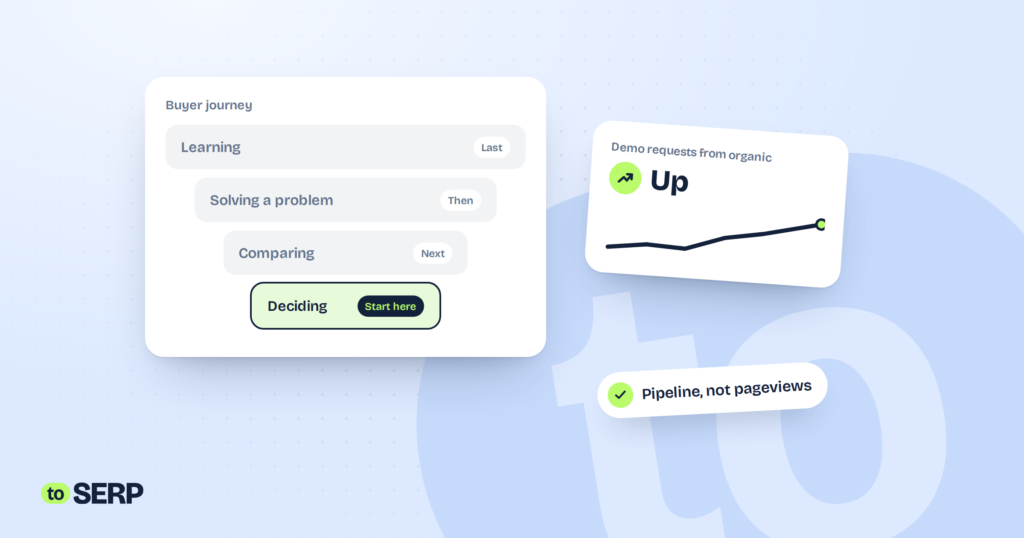
Plenty of SaaS blogs get thousands of visits a month and almost no demo requests. The traffic is real, but it comes from people learning about a topic, not people choosing software. SaaS SEO pays off when it reaches buyers at the moment they compare and decide.
This guide lays out a practical SEO strategy for B2B SaaS: what to target first, which pages to build, the technical issues specific to SaaS sites, and how to measure success in pipeline rather than pageviews.
Key takeaways
- Start at the bottom of the funnel: alternatives, comparisons, pricing and use-case pages convert best.
- SaaS sites have specific technical risks, from JavaScript rendering to help centers that never get indexed.
- Review sites and AI tools shape shortlists, so earning a presence there is part of SEO now.
- Measure demo requests, trials and pipeline from organic search, not rankings alone.
What makes SaaS SEO different
Four things set B2B SaaS apart from most other SEO work:
- Long, multi-person buying cycles. Several people research before anyone books a demo, often over weeks or months.
- Crowded, comparison-heavy search results. Review sites, listicles and well-funded competitors already fill page one for most category searches.
- A product that does the persuading. The best SaaS content shows the product solving a real problem, not just describing the problem.
- Technical quirks. JavaScript-heavy marketing sites, separate app and docs subdomains, and help centers that search engines can’t reach.
Start at the bottom of the funnel
The fastest way to turn SEO into pipeline is to target the searches people make right before they choose. These searches have smaller volumes than broad topics, but each visitor is far more likely to book a demo.
| Buyer stage | What they search | Page that wins | Priority |
|---|---|---|---|
| Ready to decide | “[competitor] alternatives”, “[you] vs [competitor]”, “[category] pricing” | Alternatives, comparison and pricing pages | Start here |
| Comparing options | “best [category] for [use case]”, “[category] for [industry]” | Use-case and industry pages, honest roundups | Next |
| Solving a problem | “how to [fix the problem your product solves]” | In-depth guides that show your product in context | Then |
| Just learning | Broad definitions and trends | Educational articles | Last |
Notice what’s last on the list: the broad educational articles most SaaS blogs start with. They still matter for authority, but they rarely produce pipeline on their own. Build the pages that convert first, then use educational content to support them with internal links.
We cover each of these page types in detail, with what to include and the mistakes to avoid, in 7 SaaS SEO page types that turn searches into demos.
Get the SaaS-specific technical basics right
Make sure your marketing pages render without JavaScript tricks
Many SaaS marketing sites are built with JavaScript frameworks. If important text only appears after scripts run, search engines and AI crawlers may see a thin or empty page. Server-side rendering or static generation for marketing pages avoids the problem.
Keep the app out of the index, and the docs in it
Login pages and in-app screens shouldn’t be indexed. Your documentation and help center usually should be. Help articles often rank for valuable “how to” and integration searches, and they’re exactly the kind of specific, factual content AI tools like to cite.
Connect the subdomains
If your blog, docs or help center live on separate subdomains, link them clearly to your main site and to each other, so their authority flows to the pages that convert.
Win where buyers compare
For many SaaS categories, review sites such as G2 and Capterra rank for the most valuable “best [category]” searches, and AI tools often draw on them when recommending products. Being listed, with recent reviews from real customers, is now part of SEO. So is appearing in independent roundups and industry publications.
This matters more each year, because business buyers increasingly start their research with AI tools that summarize these sources:
The takeaway: you need to rank, and you also need to be the product the answer names. Our guide on getting recommended by ChatGPT and other AI tools covers how.
Measure pipeline, not pageviews
Set up tracking that connects organic visits to the outcomes your sales team cares about: demo requests, free trial signups and, ideally, qualified opportunities in your CRM. Then report on them every month.
- Primary: demo requests, trials and qualified opportunities from organic search
- Supporting: rankings and clicks for bottom-of-funnel searches, and conversion rate by landing page
- Context: total traffic, which on its own says little about revenue
Want to see which searches could bring you demos? Start with a Growth Audit
A realistic 90-day plan
- Days 1 to 30: fix technical issues, set up demo and trial tracking, and map the bottom-of-funnel searches worth winning.
- Days 31 to 60: publish or rebuild your alternatives, comparison and pricing pages, and tighten internal links to them.
- Days 61 to 90: add use-case and industry pages, start a review-site and mentions push, and begin tracking how often AI tools recommend you.
After 90 days you should be able to see which pages bring in demos, and double down on what works.
Frequently asked questions
How long does SEO take for a B2B SaaS company?
Bottom-of-funnel pages, such as comparisons and alternatives, can start bringing in demo requests within a few months because competition is narrower and intent is high. Broader category rankings usually take 6 to 12 months, depending on how established your competitors are.
Should we use programmatic SEO?
Only when every generated page is genuinely useful, for example integration pages with real setup details, or templates people can actually use. Thin pages created at scale rarely rank for long and can drag down how search engines see the rest of your site.
Do blog posts actually drive SaaS demos?
Some do, most don’t. Educational posts build authority and capture early research, but the pages that convert are usually comparisons, alternatives, use-case and pricing pages. A healthy SaaS content plan starts there and uses the blog to support them.
Should SaaS SEO be in-house or outsourced?
Many SaaS teams combine both: an in-house marketer who knows the product and customers, and a specialist team for strategy, technical SEO and content production. What matters most is that someone owns the plan and reports on pipeline, not just traffic.